UT (Ultrasonic Testing)
The ultrasonic testing (UT) method uses ultrasonic waves to identify internal defects in parts, having very high sensitivity. It is essential for deep material evaluation.
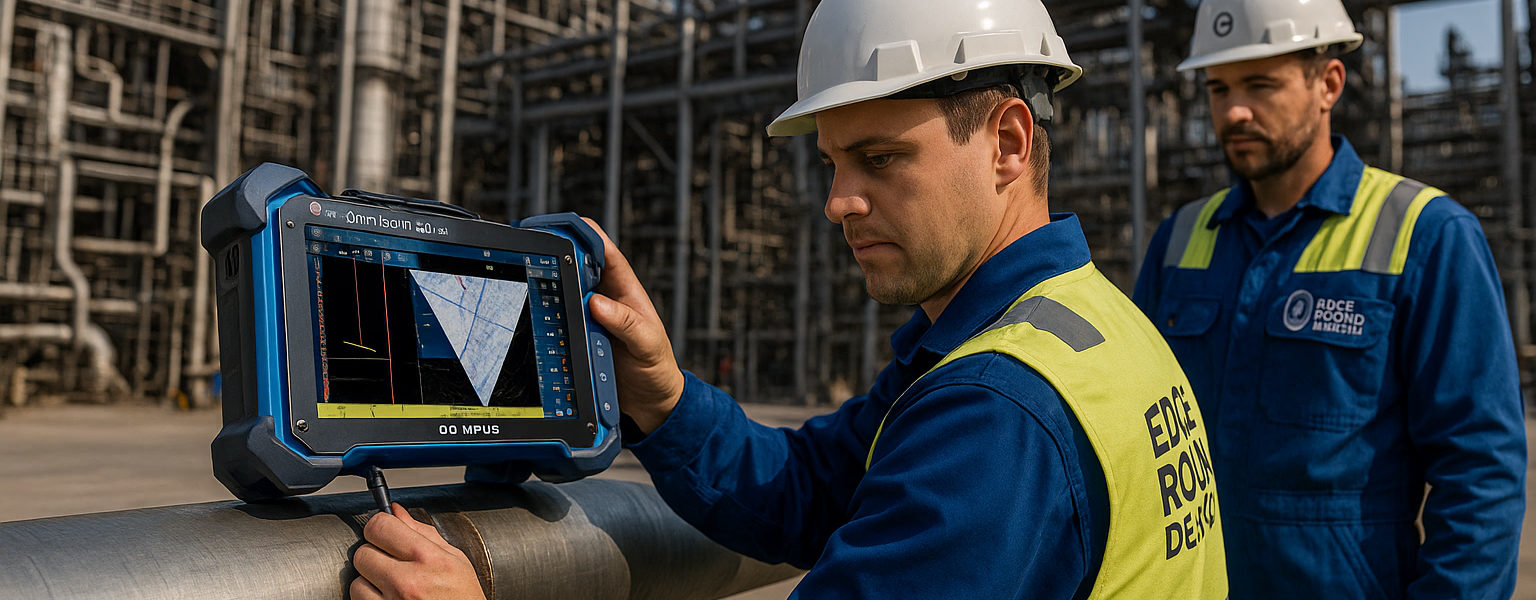
Advanced testing methods for assessing the integrity and safety of industrial structures and equipment, without damage.
We offer non-destructive testing services performed by certified personnel, according to international standards. These services are essential for assessing the integrity of industrial parts and structures, without damaging them.
Non-Destructive Testing (NDT) allows the detection of defects and assessment of conformity with project requirements, applying advanced testing techniques during production or throughout the equipment's usage.
Controlul nedistructiv se efectuează cu scopul de a asigura siguranța structurilor industriale, prin metode care nu afectează materialul testat, chiar și la temperaturi ridicate (peste 60°C).
Aceste tehnici sunt esențiale pentru monitorizarea constantă a stării echipamentelor, în special în domenii critice, cum ar fi industria petrolieră și gazieră.
The ultrasonic testing (UT) method uses ultrasonic waves to identify internal defects in parts, having very high sensitivity. It is essential for deep material evaluation.
PAUT is an advanced technique that allows rapid and precise defect detection by using a phased arrangement of ultrasonic waves with a multi-element transducer. This method is essential for evaluating complex structures under pressure.
The TOFD method analyzes ultrasonic waves that diffract around defects, offering a precise evaluation of structure integrity and facilitating continuous monitoring.
Magnetic particle testing (MT) detects surface defects in ferromagnetic parts by creating a magnetic field and applying magnetic particles to highlight cracks.
Penetrant testing (PT) allows the identification of surface defects by using a liquid that penetrates cracks and pores, facilitating defect visualization with a developer agent.
Visual testing (VT) is the basic method for identifying surface defects through observation of visual details, being rapid and efficient.